
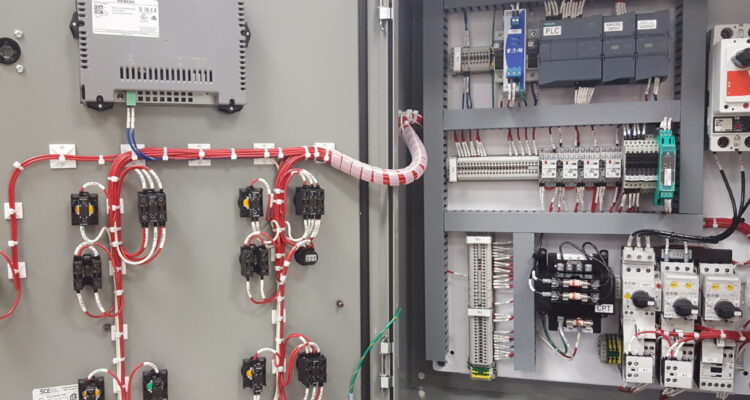
What is a VFD Control Panel?
Using a VFD control panel automatically integrates all electrical and automation constituents like relays, contactors and communication modules, controlled by a programmable logic controller (PLC), to provide command and control of motor speed through Variable Frequency Drive (VFD). These panels are crucial in industrial automation since they enable control of a motor’s speed, torque, and rotational direction depending on real-time data feedback from the system, input and load demand. Rather than keeping motors running at full power, which is inefficient, a VFD control panel provides unparalleled control by optimizing energy use.
For the majority of modern automation companies dedicated to achieving sustainable industrial operations, these panels are vital in providing enhanced flexibility and efficiency. This technology is used in many industrial sectors like manufacturing, water treatment, oil refining, HVAC systems, and many more.
Maximizing Efficiency: How Automation Companies Utilize VFD Control Panels for Optimal Performance
Energy Efficiency and Cost Savings
One of the greatest benefits of a VFD control panel in an industrial environment is increased energy efficiency. In older systems, motors are set to a fixed speed and are not adjusted to the workload– this alone leads to a lot of energy being wasted. VFDs help by varying the motor speed to the operational requirements; therefore, VFDs allow motors to operate with the energy appropriate for the task needing completion. This enables companies to reduce consumption and cut down expenses on energy.
The ability to conserve energy is extremely important for industries where energy expenses comprise a large part of operational expenditures. This feature is advantageous for automation companies in the Kingdom of Saudi Arabia (KSA) as well as other countries because energy efficiency not only helps save money, but also helps the environment as operational carbon emissions are lowered.
Improved Motor Performance and Longevity
Improper motor control limits the performance and life span of a motor. Exacting motor speed control enhances a motor’s precision. A VFD control panel offers precise control over motor speed, which optimizes the performance and life span of a motor. A motor in a traditional system is fixed in speed and works harder than what is reasonable to do, causing wear and tear. Always being able to rest assured knowing that all units on a system ensures mechanical stress provides the assurance of optimum protection with the ability a VFD has to control and adjust motor speed.
When motors are operated within the prescribed speed limits according to their respective load conditions, they tend to experience overheating, vibration, and mechanical wear and tear to a lesser extent. This lowers the chances of repairs and replacements becoming a frequent occurrence, subsequently leading to reduced maintenance expenses and increased equipment longevity. Hence, automation companies experience a further decline in downtime, an increase in productivity, and an overall maximization of ROI in machinery because these savings can be invested elsewhere.
Smooth Start and Stop Mechanism
Traditional motors often suffer from issues like inrush currents when starting or stopping abruptly. This can cause mechanical stress, damage to the motor windings, and increased energy consumption. The VFD control panel addresses this problem by providing a soft start and stop mechanism.
Instead of a sudden surge of power, VFDs gradually ramp up or down the motor speed, reducing the mechanical shock to the system. This smooth start and stop functionality not only improves the overall lifespan of the motor but also reduces the chances of damage to the associated machinery. For industries that rely on heavy-duty motors and equipment, this is an essential feature that ensures both reliability and efficiency.
Enhanced Control with Automation and PLC Systems
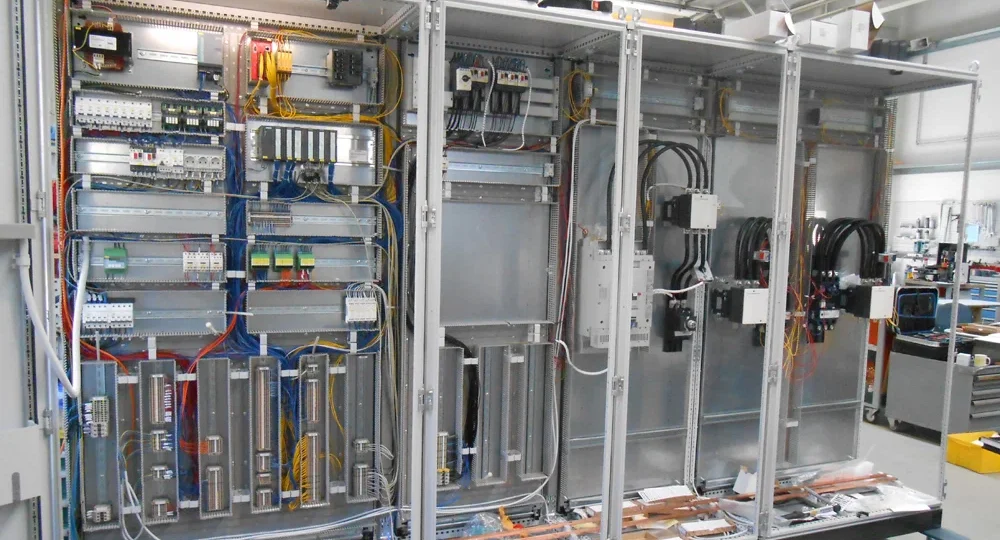
Merging a VFD control panel with a PLC system gives an automation company more flexibility with control over industrial processes. This merger allows for real-time control of VFD performance depending on the control requirement, like load and process autonomy.
In a manufacturing plant, for instance, the PLC can be programmed for automatic control to modify the speed of the motor to match the workload, thus optimizing energy use. In addition, remote monitoring and modification functions in the PLC Repair enable an operator to alter speed control settings or perform troubleshooting without physical attendance.
This type of automation improves the precision of control over intricate systems on an industrial level. With reduced manual interference, the production process becomes more reliable, which improves efficiency.
Reduced Mechanical Stress and System Failures
By controlling the acceleration and deceleration of a motor, a VFD control panel helps reduce mechanical stress on motor components. Sudden changes in speed can lead to excessive wear on the motor’s internal parts, such as bearings and shafts. A VFD slowly changes the motor speed, ensuring smooth transitions and helping prevent mechanical failure.
In industries where heavy machinery is in constant operation, this reduction in mechanical stress helps prevent unexpected breakdowns, improving the overall reliability of systems and reducing maintenance costs. Automation companies can achieve higher uptime and ensure their systems run without frequent interruptions.
Customization and Flexibility for Various Applications
A VFD control panel is highly customizable and can be adapted to meet the unique needs of various industrial applications. The ability to adjust motor speed based on specific requirements allows for the fine-tuning of processes, ensuring maximum efficiency.
For example, in an HVAC (Heating, Ventilation, and Air Conditioning) system, the system adjusts the motor speed based on the building’s temperature or air quality. Similarly, in pumping stations, operators regulate the pump speed depending on the volume of water being moved. VFDs offer this level of flexibility, allowing automation companies to optimize their systems for a wide range of applications.
Reliability and Reduced Downtime
The integration of the VFD control panel helps reduce system downtime by providing operators with better control and monitoring tools. If issues arise, maintenance can be carried out more efficiently, as the control panel allows for easy diagnostics and troubleshooting. By ensuring that the system is always operating under the best possible conditions, automation companies can minimize downtime, keep production running smoothly, and meet strict deadlines.
Why VFDs are Essential for Energy Efficiency
The global consumption of electricity is around 45% using electric motors. This is an enormous amount of energy. The use of variable frequency drives significantly lightens that load. Motors operating at half speed consume only 12.5% of the energy compared to running at full speed.
The policies surrounding green building and energy now advocate for, if not mandate, the installation of a VFD Repair Servicers in commercial and industrial projects. A company can save energy and qualify for various energy subsidies while also improving their sustainability ratings by installing a VFD control panel.
Automation Company and VFD Control Panel: Optimizing Performance and Energy Efficiency

An automation company focuses on supervisory control and data acquisition (SCADA) systems integration to AI deep learning, responsive to advances streamlining in complex workflows in processes using technological innovation VFD control panel. The Variable Frequency Drive entails the control panel that manages its associated motor speed and electrical systems functioning industrial commercial applications controls motor responsiveness power consumption system optimization control by adjusting PCS systems Decrementing mechanisms.
Motor interface process automation in combination with VFD control creates maximized motor inertia control allowing increased operational smoothness, decreased total energy consumption, increased decidability and operational efficiency, automatic performance elemental structure, subsystem, super system and limb, and fulcrum driven Maintenance Structure. The Industrial Automation Services Integration Microwave VFD can help eliminate business operational and productivity bottlenecks, lower costs per job, extend equipment lifespan, lower number of needed repairs, preventative maintenance, and lessen required breaks, downtime during work periods.
Fundamentally, the VFD control panel is a fundamental component in the system control framework under a Automation V system. These provide commanding and supervisory feedback to tuned control controllers, energy efficiency and ensure the reliability loved together, while systems and machines built measure unification and fluidic devices.
Conclusion
In modern days, the global industry is dominated by competition. In such an environment, efficiency and dependability determine an organization’s success. Qimam Affan control panel VFD units not only provide advantages, but are also necessary to remain within competition. Integrating a PLC system with electrical control panels boosts operations, making them precise, intelligent, and eco-friendlier, as well as allowing them to expand. Aside from gaining a competitive edge within your industry, our company also provides complete superior expert repair services aiming to enhance industrial equipment optimal operation. We offer a large scope of services from AC/DC motor repair, CNC controller repair, HMI Display repair, VFD and Servo motor repair, PCB repairs and even bespoke repairs on demand.
Our dedicated technicians focus on complex problem resolution, marked part elimination and system overhaul, with specialists for every task in-house. They are equipped to respond to equipment malfunctions every time maintenance is required, intervening to bring your operational costs down while ensuring dependability and uninterrupted operations. Our clients consider us the partner that ensures the equipment’s dependable and efficient delivery. From day one we prioritize having your industrial machines perform their best with solutions to track and keep critical machinery performing with extended service life, putting performance over time as the leading metric.
FAQ’s
What is a VFD in a control panel?
A VFD (Variable Frequency Drive) is an electronic device that controls the speed of an electric motor by adjusting the frequency and voltage supplied to it.
What is a VFD used for?
A VFD is used to control motor speed in applications like pumps, fans, and conveyors, improving energy efficiency and performance.
How do you control a VFD?
A VFD can be controlled manually (via a keypad), remotely (using switches or PLCs), or through automation systems with communication protocols.
What is the basic function of a VFD?
The basic function of a VFD is to adjust the motor speed by varying the frequency and voltage, improving energy efficiency and protecting the motor.


Pingback: Why Control Panels Are Critical for Streamlining Industrial Process
Pingback: What to Look for When Selecting a Servo Motor Driver in KSA