
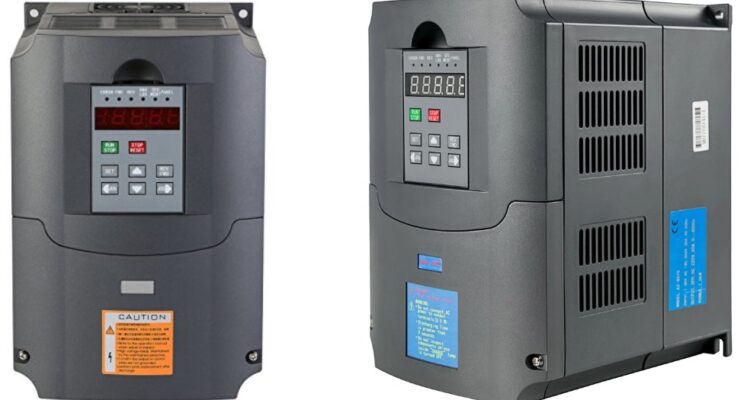
The control of motor speed serves as the basis of a myriad of tasks whether it be industrial, commercial or within the household. It ensures that multiple systems and machines run optimally and more importantly, productively, whilst improving their efficiency and lifespan. These advantages are useful as they improve productivity and effectiveness while minimizing the consumption of energy, operational funds, and system degradation. Additionally, these advantages improve the state of sustainability as they lessen the negative energy impact on the environment and increase the lifetime of important equipment through the reduction of energy waste.
While exploring how to enhance operational efficiency by employing modern technology, the subject of VSD (Variable Speed Drive) and VFD (Variable Frequency Drive) is always brought up. This forms a single concept but the distinctions in their structure and purpose make it necessary to regard them as separate concepts. Although some overlap exists between two terms, each of them is distinct in style, function, and scope of application. To fully harness system efficiency, cut down on unnecessary energy use, and guarantee the proper functioning of motor-controlled equipment, it is crucial to know the differences between VSD and VFD, and the context in which each drive is most effective. Understanding these differences facilitates increases in selection precision for certain industrial and commercial requirements leading to more efficient systems and ensuring equipment performance durability.
What is a VFD (Variable Frequency Drive)?
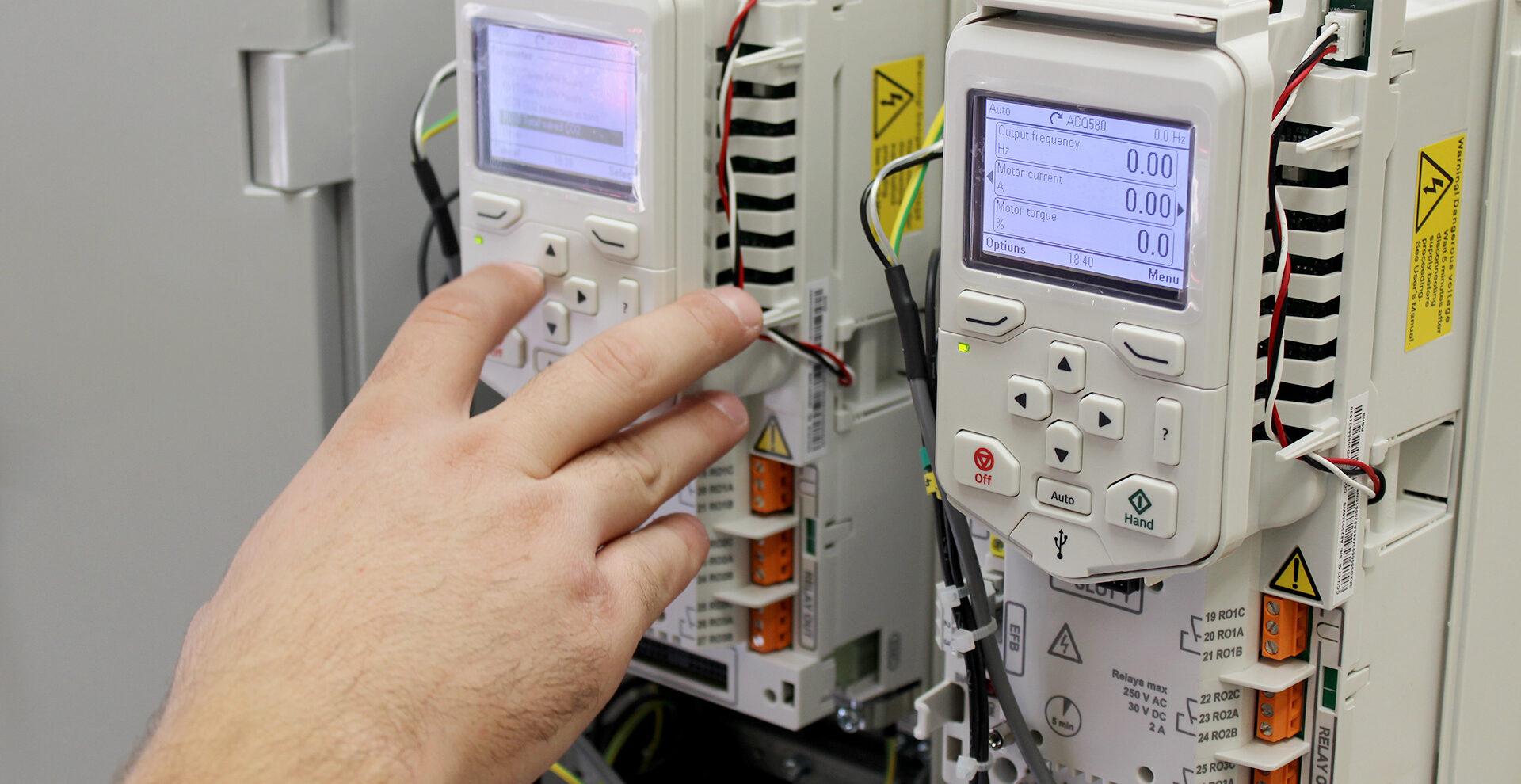
A VFD is a flexible electronic instrument that governs the mechanical power output and oscillatory speed of an AC motor by managing the power supply’s voltage and frequency. Industries are able to maximize the efficiency of energy use, mitigate device mechanical stress, and enhance operational accuracy with the help of VFDs. VFDs are particularly useful to highly precise industrial motors in routine applications like automation, HVAC systems and VSD manufacturing plants.
The steps that illustrate how a VFD operates begins with an input AC power being changed into DC through a rectifier. Subsequently, the DC electricity is switched back into AC with an output frequency that can be modified. This feature allows users to control the motor speed effectively. The amount of electric energy consumed dictates how precisely the speed of an electric motor can be controlled to satisfy operational requirements.
The VFD control panels serve as the central hub through which the motor operations are controlled, which in turn feeds to the various industrial settings. With these systems, anything from electric to mechanical stress is minimized, hence extending the lifespan of the motors. The effective control of acceleration and deceleration, coupled with minimizing stress, reduces the damage caused through a typical turn on/off cycle.
What is a VSD (Variable Speed Drive)?
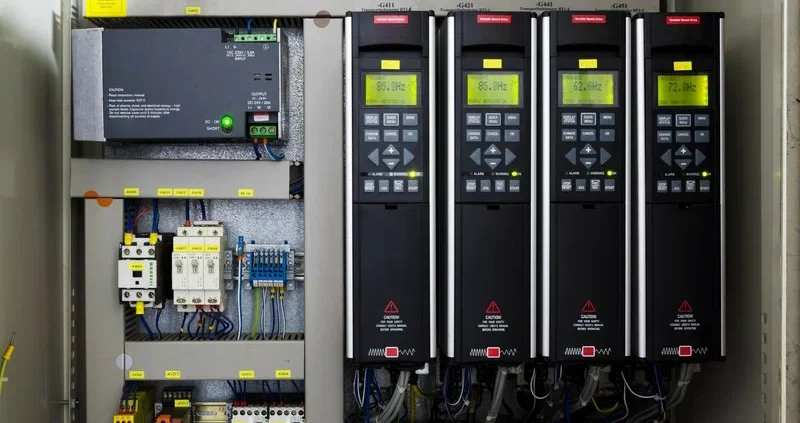
A VSD is a broader term that refers to any device used to control motor speed. Unlike VFDs, which specifically adjust frequency and voltage for AC motors, a VSD encompasses various technologies, including VFDs, DC drives, mechanical drives, and hydraulic systems. VSDs provide the flexibility to regulate the speed of both AC and DC motors, making them suitable for a diverse range of applications.
The types of VSDs include Variable Frequency Drives (VFDs), which control AC motors by adjusting frequency; DC Drives, which regulate DC motors by altering voltage; Mechanical Drives, which use gears, pulleys, or belts to change speed; and Hydraulic Drives, which utilize fluid pressure to control motor operations. This versatility makes VSDs ideal for industries requiring multiple types of motor control methods.
While VSDs offer flexibility, the selection of a particular type depends on the specific application requirements. For instance, in cases where precise control over an AC motor is needed, a VFD would be the preferred choice. However, in applications that involve both AC and DC motors, a VSD provides a more adaptable solution.
Key Differences Between VFD and VSD
-
Scope and Functionality:
VFDs (Variable Frequency Drives) fall under the category of VSDs (Variable Speed Drives). While each VFD falls under the category of a VSD, not every VSD can be classified as a VFD. Consequently, VSD technology, which manages the speed of electric motors by modifying the frequency of power supply to AC motors, is part of the VFDs’ broader group.
By changing the frequency of electrical power supplied to the motor, which determines the speed or rate of the motor rotation, VFDs regulates the speed of AC motors. VSDs, on the other hand, are able to control both types of AC motors (which uses frequency control as VFDs do) and DC motors (which uses voltage or current adjustment). As compared to VFDs, VSDs can be used to control speed for a wider range of applications because they employ different means, such as AC frequency change and DC voltage change, to control speed.
-
Application:
VFDs are primarily utilized in industries that demand careful management of AC motors. These industries also require moderation of motor speeds to enhance efficiency as well as productivity. Typical examples are HVAC systems which need variable rotational speeds to pump air and regulate temperatures, water treatment plants which have to control pump speeds to meet varying demands, and automation systems which depend on precise speed adjustment in order to achieve desired outcomes and sustain production quality and consistency.
On the other hand, VSDs are used in a much broader range of applications which makes them suitable for the control of both AC and DC motors. This makes VSDs highly appropriate for complex industrial settings such as mining where various types of machinery are powered by both AC and DC motors, manufacturing where processes may require equipment to incorporate different motor types and speeds, and mechanical processing where machines may need to be operated at different speed options. Adoption of VSDs, especially in contexts that require both types of motors, or in conjunction with other methods of speed control, caters for many operational demands.
This difference in application and functionality highlights that while VFDs are specifically designed for AC motor control, offering excellent performance and energy savings, VSDs provide a more versatile solution for industries requiring a range of motor types and speed regulation methods. Thus, understanding these distinctions allows industries to select the right motor control technology based on the specific needs of their operations.
Which One is Better?
The choice between a VFD and a VSD depends on the nature of the application. If the goal is to efficiently control an AC motor, a VFD is the best option. It offers precise control, significant energy savings, and improved operational performance. However, if an application requires both AC and DC motor control, a VSD is the better choice due to its broader range of control methods.
For industries focused on energy efficiency and process automation, VFDs provide an effective solution. They optimize motor speed based on demand, leading to reduced energy consumption and lower operational costs. On the other hand, industries that involve heavy machinery with mechanical or hydraulic systems may benefit from a VSD, as it offers multiple approaches to speed control.
Advantages and Disadvantages of VFDs and VSDs
VFDs are beneficial in a number of ways, including optimal speed control of AC motors where the motor speed is adjusted according to the demand, thus achieving energy efficiency. Besides, VFDs also minimize the mechanical strain of the equipment which helps maximize the motor’s longevity, and offers gentle acceleration and deceleration to avoid sudden starts and stops. These features are great for VFD control panels or for VFDs that are used in industrial automation processes that require accurate motor control. On the other hand, there are some drawbacks of VFDs. Their use is restricted to only AC motors and cannot operate on DC Motors. A specialist is needed to set up and adjust a VFD, and its cost can be considerably more than that of a mechanical drive system.
Meanwhile, VSDs have more motor control flexibility as they can control both AC and DC motors. Therefore, they can also incorporate various speed control techniques including VFDs, mechanical drives, and hydraulic systems. This flexibility is useful in different industries such as manufacturing and mining. VSDs also provide energy benefits and increased operational life of the equipment. The variety of options in terms of controls also results in increased complexity in terms of choosing the appropriate VSD. Some VSD classes, for instance, mechanical and hydraulic drives, are more complex in maintenance. Also, according to the methods of control chosen, VSDs can become more expensive than other alternatives.
How to Choose the Right One for Your Needs?
Selecting the right drive depends on the specific needs of your application. If your goal is to control an AC motor, a VFD (Variable Frequency Drive) is usually the most efficient and cost-effective option. VFDs are designed to adjust the frequency of the power supplied to AC motors, which makes them perfect for situations where energy savings, precise speed control, and smooth operation are important. This is especially true for industries like HVAC, water treatment, and automation, where controlling motor speed based on demand saves energy and reduces costs.
If your industry requires managing both AC and DC motors, a VSD (Variable Speed Drive) offers greater flexibility. VSDs can handle both motor types and support various speed control methods. They are ideal for industries like mining, manufacturing, and mechanical processing, where different types of motors are used.
When energy savings and precise speed control are crucial, VFDs are generally the better option, as they adjust motor speed to match load demands, saving energy and extending motor life. However, if your application needs hydraulic or mechanical control, such as in systems requiring torque adjustments, a VSD might be a better choice. Ultimately, the decision depends on the types of motors used and the level of control required for your specific application.
Conclusion
We here at Qimam Affan appreciate the challenges that may arise in choosing the correct solution for motor speed control. Selecting either a Variable Frequency Drive (VFD) or a Variable Speed Drive (VSD) occurs with regard to the specific request of a given application. For example, VFDs are perfect when controlling AC motors as they achieve remarkable energy economy while providing accurate speed control. VSDs, on the other hand, are more versatile as they can control both AC and DC motors which makes them more applicable in a wider range of industries.
The choice of the correct drive system can greatly enhance your operations, in, for example, energy efficiency, operational cost, and life cycle of the equipment. Whether you require the VFD to control the AC motor optimally or the VSD to accommodate several motor types, the right choice will certainly improve operational efficiency. Such strategic choices will undoubtedly lead to higher productivity and lower costs for the business over time.
Along with assisting in proper motor drive selection, Qimam Affan offers industry-specific support services. These include PLC repair, AC/DC motor repair, HMI display repair, servo motor repair, PCB repair and Automation Services, and many others. Our professionals work collaboratively with you in order to develop strategies for your business challenges. We invite you to share with us your motor control requirements and let us work together to see how our services can enhance your efficiency.

Pingback: What Is an Electrical Distribution Board and How Does It Work?
Pingback: VFD vs Traditional Motor Controllers: Why Modern Industries Prefer it.